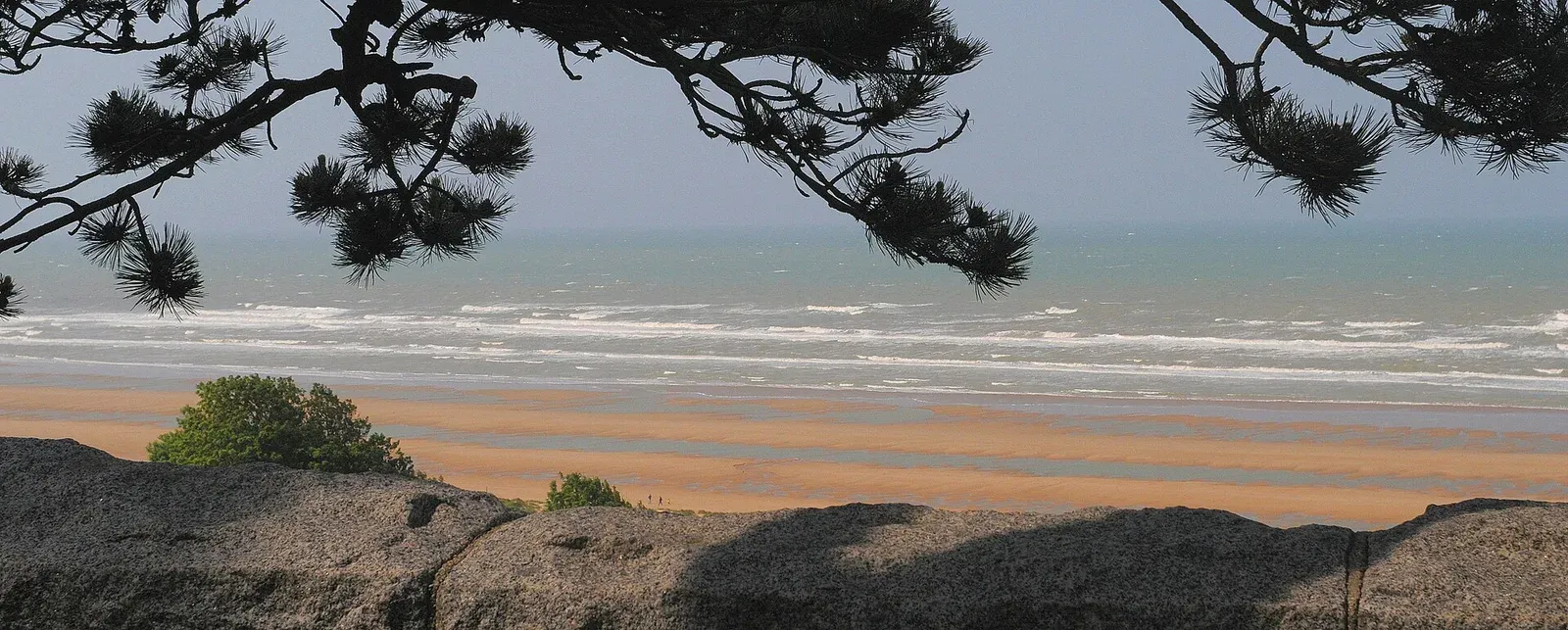
Choose your D-Day sector by the history you want to understand, then build the day around a few related sites. Omaha, Gold and Juno connect to different landing stories. A family connection or a particular historical question can be more useful than trying to include every beach on one journey from Paris.
Use the sector as a starting point
The grid combines the regional tourism board’s sector descriptions with planning criteria. It is not a complete military history or a promise to visit every named place.
| Your main interest | A sector to investigate | Possible focus for the request |
|---|---|---|
| American landings and remembrance | Omaha | Beach landscape and the American Cemetery at Colleville-sur-Mer |
| British landings and invasion logistics | Gold | British Normandy Memorial at Ver-sur-Mer; Arromanches D-Day Museum if the harbour story is a priority |
| Canadian landings | Juno | Juno Beach Centre and, if relevant, a Juno Park guided visit at Courseulles-sur-Mer |
| A relative or particular military unit | The places linked to that story | Share the unit, dates or family information with a specialist guide |
| Several national sectors are equally important | A longer itinerary | Give the distinct sectors separate visiting time rather than forcing a single-day checklist |
The official Normandy Tourism guides identify Omaha with American landings, Gold with the British sector and Arromanches, and Juno with Canadian landings around Courseulles-sur-Mer. Use those guides for the historical introduction and a specialist for questions needing deeper interpretation.
Omaha: give remembrance time
If the American landings are your priority, Omaha and Colleville-sur-Mer form a focused starting choice. Consider what you want to do at each: walk the landscape, read the interpretation, spend time at the cemetery or take an accompanied explanation.
Pointe du Hoc or Arromanches may be considered as a further stop, depending on the subject and route. The decision is what the additional place adds to your understanding, and what time it removes from the first visits. A cemetery visit should not be squeezed into a gap merely to add another name.
Gold: distinguish a landing sector from a harbour visit
Gold may suit a British-history focus, while Arromanches is relevant to the logistics of the artificial harbour. Those interests can overlap but are not identical. Explain whether a beach landscape, memorial, museum or the harbour story matters most before selecting the actual stops.
For remembrance, investigate the British Normandy Memorial at Ver-sur-Mer. Its official visitor page distinguishes access to the memorial from the Churchill Centre’s opening information. Check current directions, access needs and centre opening for your date rather than assuming that all facilities share the memorial’s access hours.
For the artificial-harbour story, the Arromanches D-Day Museum uses archive film and models to explain the harbours, with the remains of Mulberry B visible from its setting. Consult the museum’s official visit information for admission and opening details. Choose this as a planned museum stop, allowing its own visiting time rather than treating it as a quick extra on every British-sector route.
A British-focused day does not need to reproduce the complete American itinerary as well. Choose the places that answer the question you brought to Normandy, then consider whether another sector is worth a separate day.
Juno: make the Canadian focus explicit
Juno may be the more relevant starting point for Canadian history. The Juno Beach Centre at Courseulles-sur-Mer provides a concrete museum focus. Its official visit-planning page also describes guided visits in Juno Park, around surviving German defensive structures. Museum admission and a guided park visit are distinct choices: check the current formats, language, timing and access conditions before fixing transport.
Decide whether your priority is the museum, an accompanied explanation of the park or time at the beach. Tell any specialist guide which of these you want covered. Neither museum admission nor park guiding is automatically included in a private transport request.
Do not assume a general “Normandy tour” follows a Canadian route. State the sector in the request and confirm the proposed sites in the final arrangements.
Decide what you will leave out
For a day from Paris, rank an essential pair of sites and one optional addition. Leave room for lunch, walking and remembrance as well as the substantial road journey. If several museums and sectors are all essential, consider a longer stay with accommodation and travel arranged separately through the relevant providers. This site’s enquiry form covers a single day returning to Paris; it does not request overnight or multi-day transport.
This is an editorial route-selection rule, not a measured schedule. The Normandy day-trip page explains the proposed 12–14 hour overall outing, transport arrangements and itinerary alternatives. It does not promise that every sector can fit.
Choose guiding separately from transport
A chauffeur connects the chosen sites; a historical guide provides the interpretation specified in the booking. Read private driver or tour guide? and confirm the guide’s language, meeting point and coverage. Site admissions, meals and guiding remain separate unless expressly included.
Send your date, Paris address, passengers, chosen sector, essential sites, family-history interests and walking needs. Request a quote for your private Normandy day trip. The team reviews the request, with no payment or automatic confirmation.
